Give the experience something people could recognize.
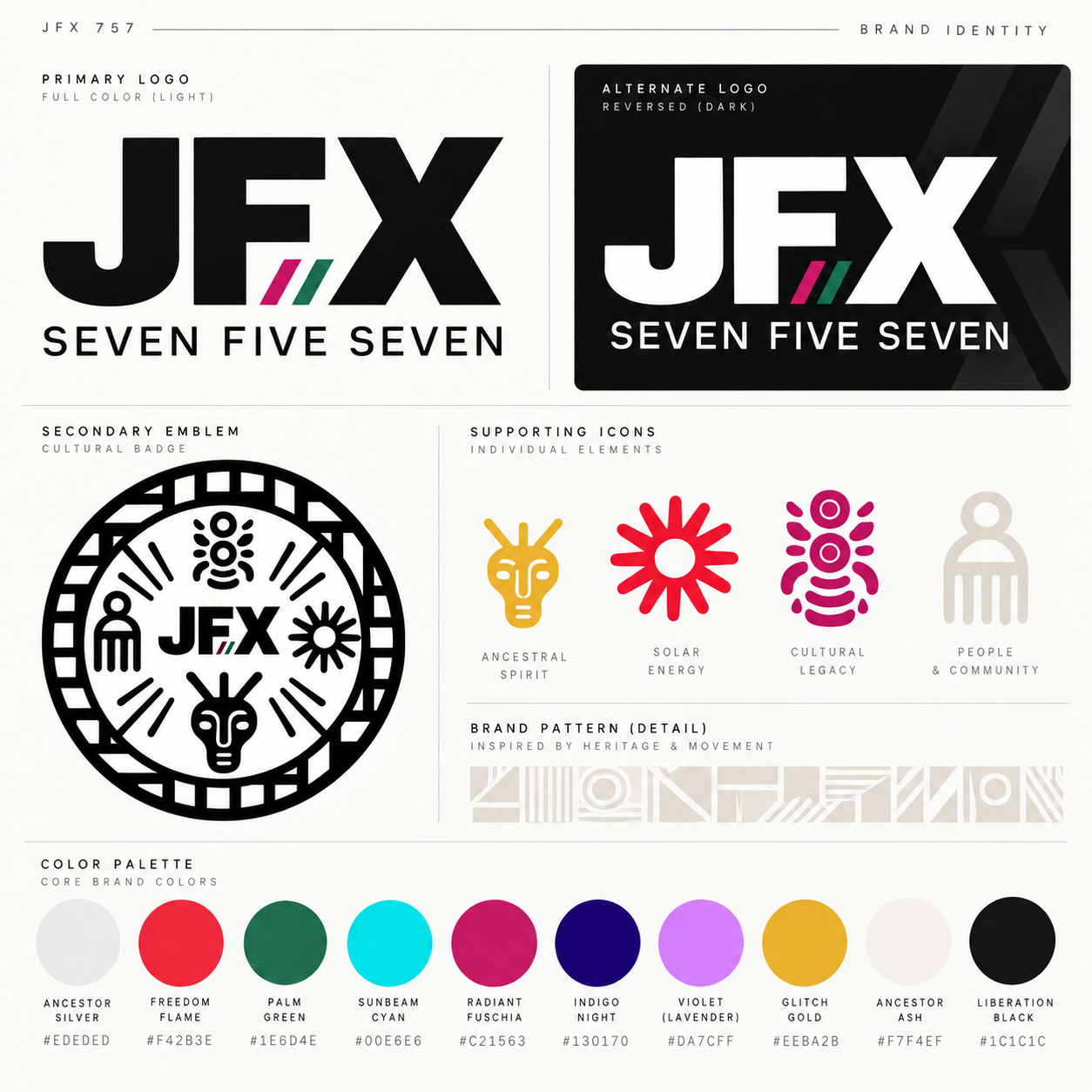
The identity created a shared visual language for JFX— from the name and positioning to the logo, color, symbols and pattern system that could move across every part of the experience.
CASE STUDY / JFX 757
What began as a Juneteenth festival became a connected cultural ecosystem—built to extend storytelling, access, participation and community beyond a single day.
THE ASSIGNMENT / WHAT HAD TO CHANGE
JFX already had culture, history, community and energy. The problem was that most of it lived inside the boundaries of the event itself.
Once the festival ended, the stories, resources, education, community connections and sponsor opportunities had nowhere meaningful to continue.
The opportunity was bigger than a website refresh. JFX needed an experience architecture capable of extending the festival beyond a single day—and giving people a reason to stay connected to the world around it.
A cultural event with powerful moments concentrated in one place and one day.
A connected ecosystem designed for ongoing access, storytelling, participation and year-round engagement.
THE STRATEGIC IDEA / FROM FESTIVAL TO WORLD
The opportunity was not to make JFX look more polished. It was to create a connected identity and experience system that could hold the culture, the programming, the place, the stories and the people around it.
Renaming created a stronger container for the experience— one capable of feeling bigger than a single event date.
The brand was reframed around cultural experience, participation and connection rather than simply festival attendance.
Logo, color and visual language gave the experience a recognizable world that could travel across touchpoints.
Backdrops, banners, connect cards and event assets brought the brand into the environment people were moving through.
The website and portal extended the experience beyond the event itself through storytelling, access, resources and year-round engagement.
Not five separate deliverables. One world, expressed five ways.
THE WORLD, MADE VISIBLE
JFX had to work as more than a logo or a website. The identity needed to move across screens, spaces, signage, people and physical touchpoints without losing its point of view.
The identity created a shared visual language for JFX— from the name and positioning to the logo, color, symbols and pattern system that could move across every part of the experience.
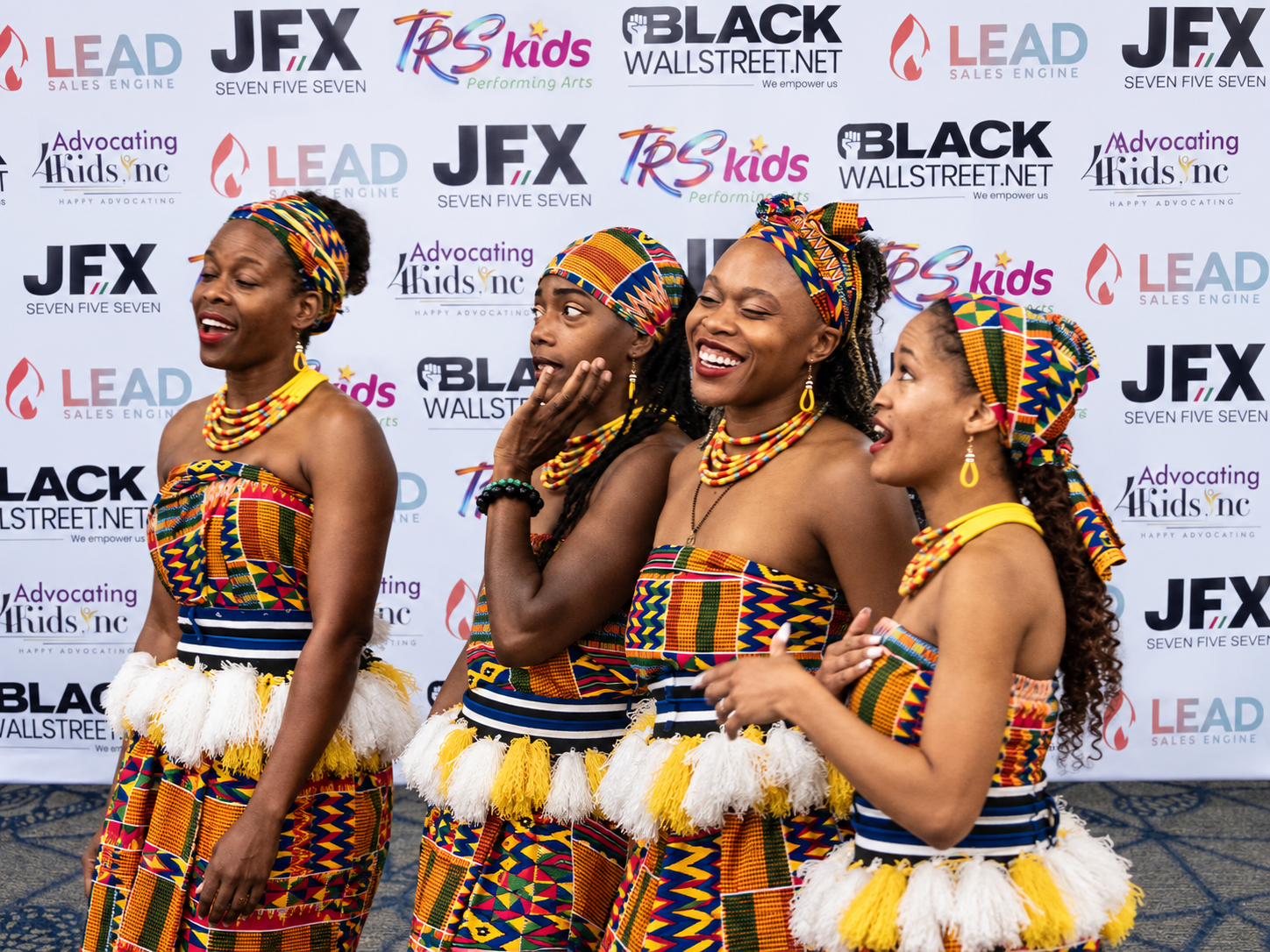
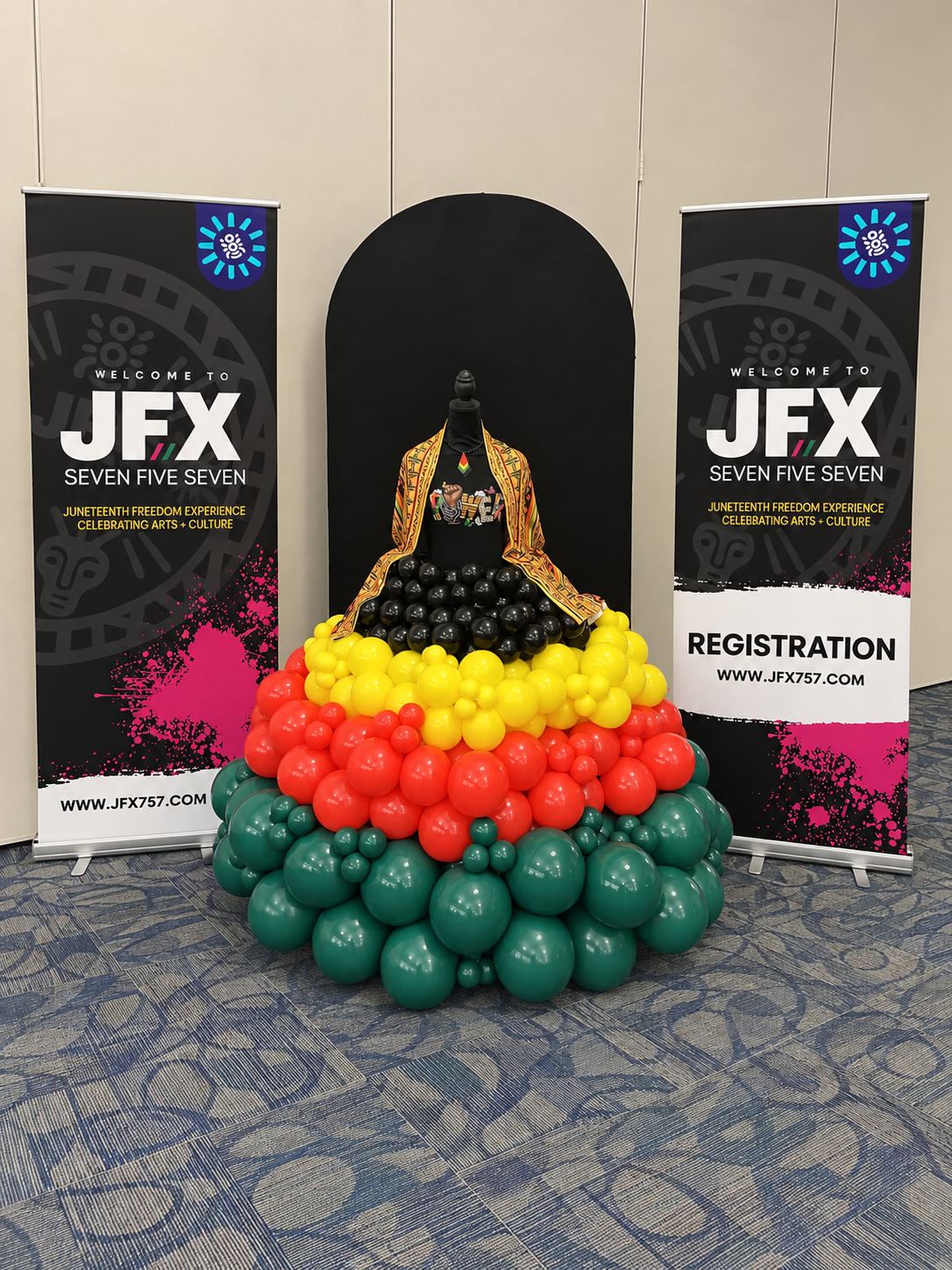
The visual system moved into the physical environment through registration signage, banners, branded backdrops and event assets—giving the experience a recognizable presence without overpowering the people at the center of it.
 BRANDED ENVIRONMENT
 WAYFINDING + SIGNAGE
COLLABORATION → SYSTEMIZATION → EXECUTION
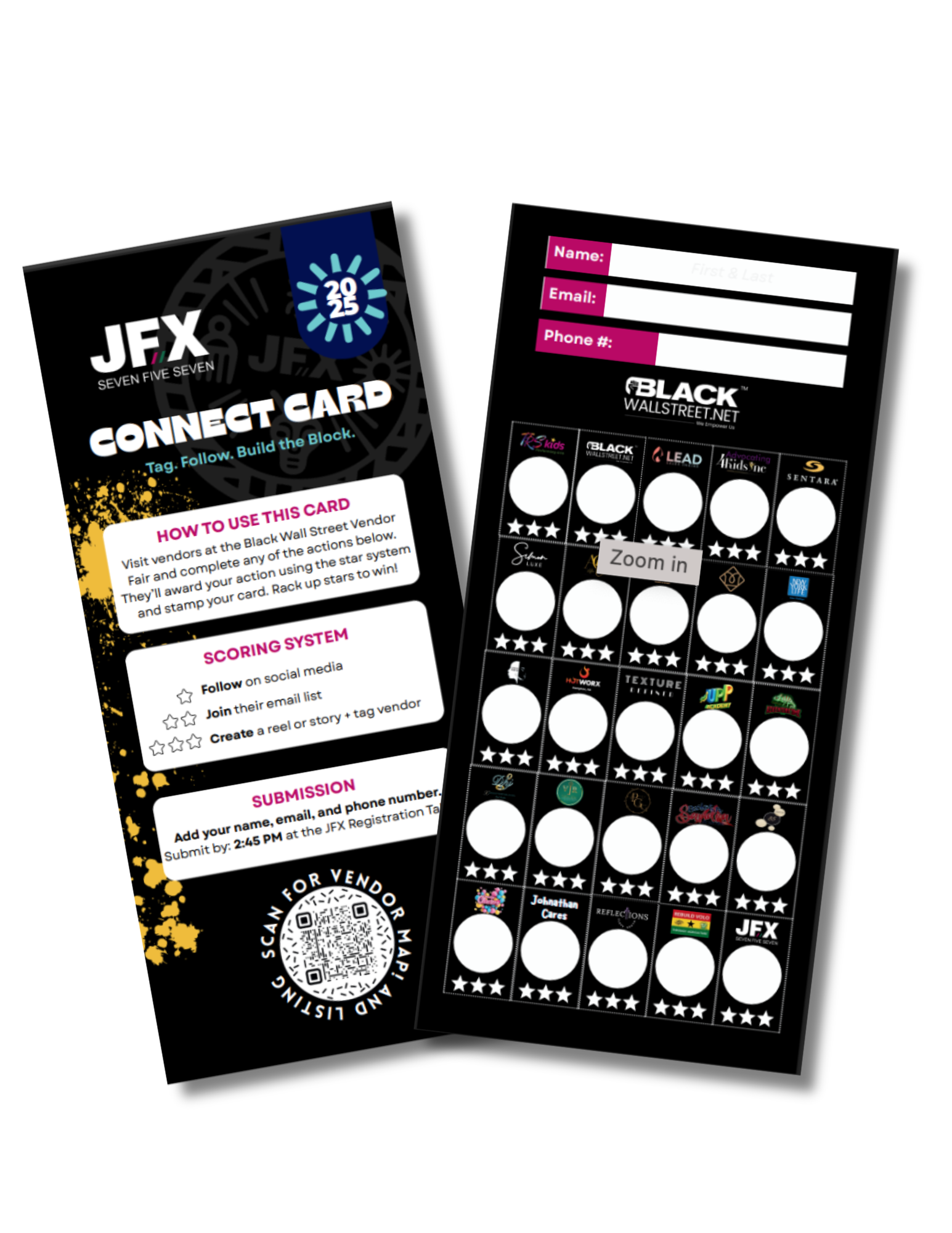
Tanya wanted to make sure participating vendors received more visibility and connection during the event.
I translated that idea into the system itself—developing the structure, instructions and final connect-card deliverable that made the concept usable across the experience.
The website became the front door into a deeper digital experience— one designed to carry the history, stories, creative expression and community of JFX beyond the festival itself.
Entering the JFX digital experience.
AFTER THE THRESHOLD
Inside, the experience moves visitors through history, documentation and participation—then gives those expressions somewhere to continue living together.
Begin with the place.
Move into the stories.
Become part of the record.
The portal first grounds visitors in the historical significance of Chesapeake through The Land Remembers.
Before asking people to participate, the experience establishes the place, history and cultural context they are stepping into.
Visitors encounter video and storytelling that reveal the making of the experience itself—from the creation of the Unity Choir to stories shared by community elders.
These layers allow moments that might otherwise disappear after the festival to remain visible, accessible and connected.
The experience shifts from receiving culture to contributing to it. Visitors are invited to add their own expression to the collective JFX story.
Those contributions can be shared within the online community visitors join after entering the portal, creating space for cultural expression and conversation to continue throughout the year.
History establishes the foundation. Stories make it human. Participation keeps it alive.
THE RECEIPTS / WHAT MOVED
Not every result shows up as a bigger attendance number. Some of the most important shifts happened in perception, sponsor readiness, regional relevance and what the experience could become next.
SPONSOR INTEREST CHANGED
JFX moved from little-to-no sponsorship into active sponsor growth, including unsolicited interest from a national brand exploring a major future partnership.
THE BRAND BECAME REGIONALLY PORTABLE
The naming system positioned JFX beyond a single city and created a structure that could support regional promotion, expansion and conversations around future host locations.
THE EXPERIENCE OUTLIVED THE EVENT
The portal extended JFX beyond the festival itself, creating space for history, storytelling, creative expression, education and year-round community participation.
ATTENDANCE HELD. PERCEPTION MOVED.
Attendance stayed roughly the same during the first rebranded cycle, while attendee excitement, perceived quality and sponsor readiness increased around the experience.
JFX stopped reading like another event on the calendar and started behaving like a platform with somewhere to go.
MY ROLE / WHAT I ACTUALLY OWNED
My role crossed strategy, identity, experience design, digital and production. Some pieces began with me. Others began as ideas inside the team that I helped turn into something structured, usable and real.
I created the JFX757 name and positioned the event as an experience rather than simply another Juneteenth festival— giving it a stronger regional identity and room to expand.
Logo, color, iconography, pattern language and the broader identity system were developed to work across both physical and digital environments.
I developed event-facing assets including banners, backdrops, campaign materials, signage and other physical touchpoints that carried the identity into the live experience.
I created the website and digital portal experience, extending JFX into history, storytelling, education, creative participation and ongoing community engagement.
Sponsorship materials and experience framing helped make JFX easier to understand, fund and imagine as something larger than a single event date.
JFX is produced by Tanya Shadley, and the strongest work came from building around the vision, priorities and ideas already moving through the project.
The connect cards are a good example: Tanya identified the need to give vendors more visibility. I took that idea and developed the mechanics, instructions and finished system that made it usable during the experience.
That's often where I do my best work—finding the structure that lets a strong idea actually function.